Observing changes in an aging parent or loved one is one of the most emotionally challenging chapters a family can navigate. You might notice subtle shifts: a refrigerator filled with expired food, a missed medication dose, or a pristine house that has suddenly become cluttered and unkempt. These moments trigger complex emotions, including family anxiety and caregiver burnout.
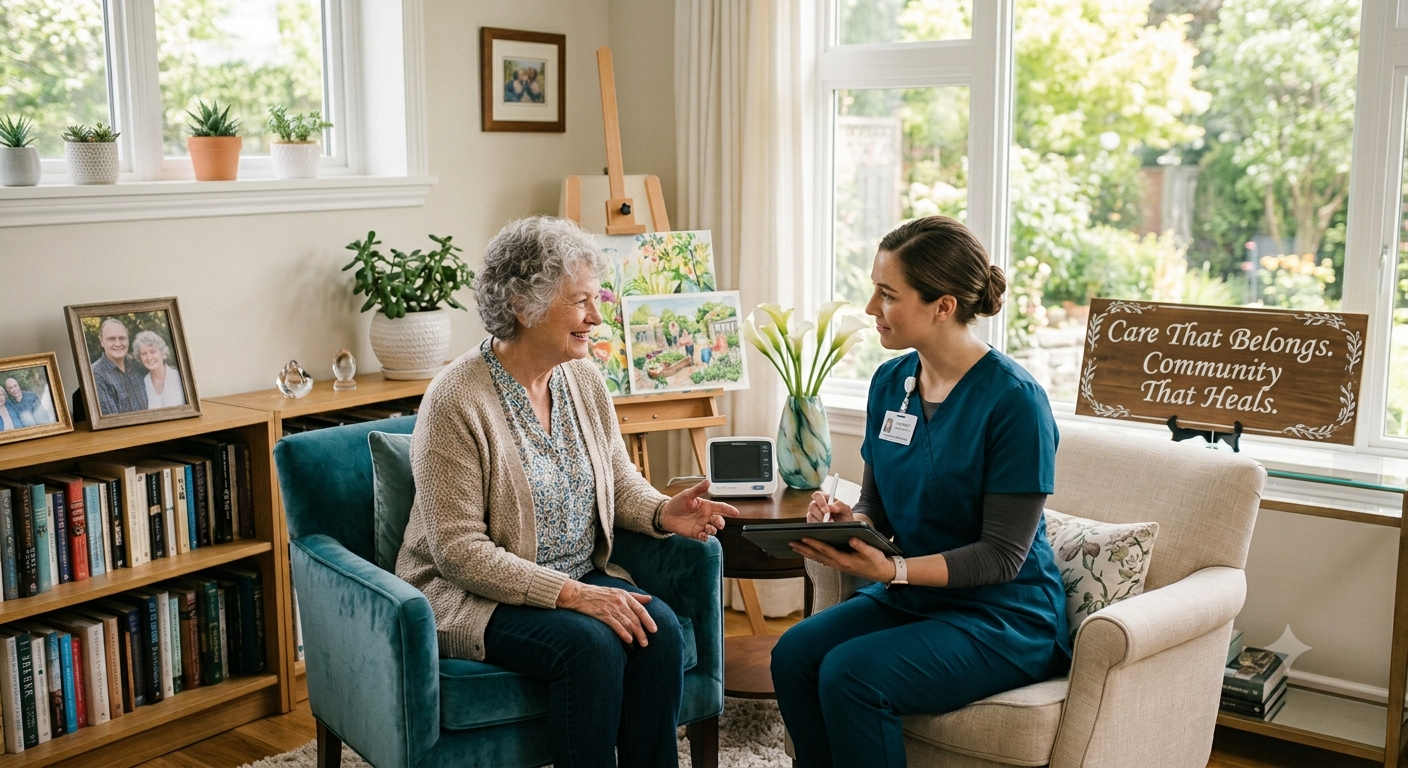
When exploring modern senior living options, many families feel overwhelmed by clinical terminology. Selecting a supportive community is not about limiting independence; it is about providing a structured environment where your loved one can safely rediscover purpose and community.
To make an informed, confident decision, it is essential to understand the structural differences between independent community living, traditional nursing care, and assisted care frameworks.
Understanding the distinctions among the various types of senior care ensures you pay only for the specific level of care your family requires.
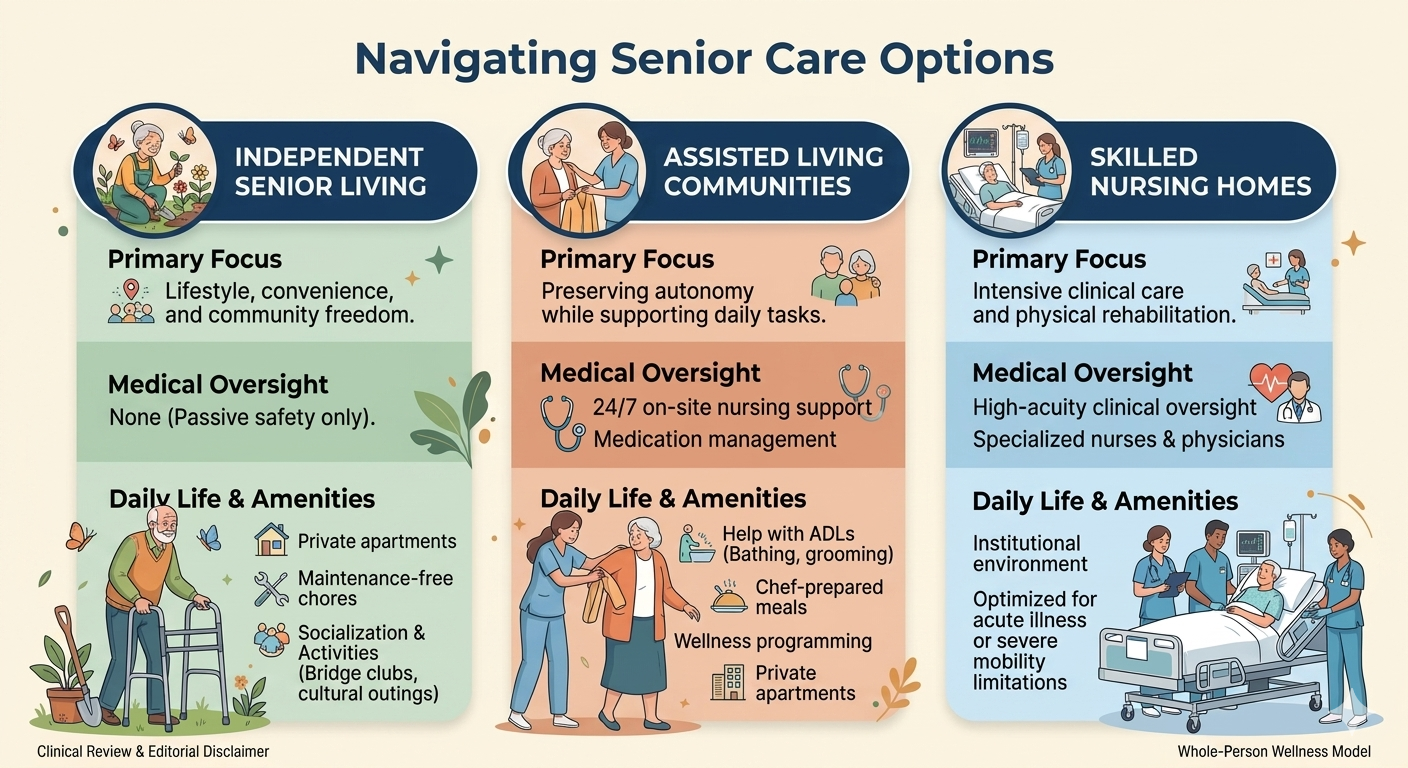
These environments are designed for active older adults who do not require medical assistance but want to eliminate the physical burdens of home maintenance, lawn care, and daily meal preparation. The primary goal here is lifestyle enhancement and social connection.
When evaluating assisted living vs nursing home options, remember that assisted environments bridge the gap between complete autonomy and institutional medical care. Residents live in private apartments but receive customized help with activities like bathing, dressing, and routine mobility.
Certified caregivers handle medication administration and baseline health coordination, allowing residents to retain control over their daily schedules.
Unlike residential care communities, a skilled nursing home functions as a clinical institution. It is designed for individuals with severe, chronic medical conditions or those requiring intensive, short-term post-hospital rehabilitation.
Families often delay researching care options until a medical emergency or a physical fall forces a sudden move. Proactively recognizing the early signs a senior needs help at home allows for a calmer, more collaborative family transition.
Selecting the right community requires looking past basic hospitality features to evaluate how a community preserves a senior's dignity and long-term health.
Look for communities that offer diverse senior socialization activities, such as gardening clubs, bridge tournaments, and cultural outings. True wellness integrates active physical motion, intellectual stimulation, and emotional engagement.
A high-quality provider does not apply a rigid, one-size-fits-all schedule to every resident. Ensure the community builds a personalized care plan tailored directly to your loved one’s unique personal history, preferences, and healthcare needs.
Health needs shift over time. Choosing a multi-tiered parent organization allows seniors to smoothly transition from standard assisted living to specialized memory care or short-term respite care without the stress of moving to an entirely new property.
Moving a parent or spouse into an assisted community is a profound act of love that restores your primary role as a supportive daughter, son, or partner, rather than a round-the-clock medical caretaker. Exploring these options early preserves your family's control over the selection process and ensures your loved one transitions into a vibrant, active environment built for longevity for older adults.
To see how personalized care can revitalize your loved one's daily routine, explore our comprehensive care models on the Breuer Health Services Page, or connect directly with a local expert using our verified Breuer Health Location Directory to schedule an on-site neighborhood tour.
This educational resource is curated by the Breuer Health Senior Living Care Team. Every informational guide is thoroughly reviewed by certified senior care administrators and licensed nursing specialists to ensure accuracy, alignment with regional regulatory frameworks, and adherence to senior care standards. This content is for general educational purposes only and does not replace professional medical diagnosis, clinical advice, or individualized physician consultations.